Main condition classes
Legacy lesion labels
Inference format
Report format
Overview
SkinScanix is an educational image-analysis prototype that takes a skin photograph through image-quality checks, skin/non-skin screening, condition classification and downloadable PDF report generation. It combines a Gradio browser interface with server-side TensorFlow Lite models, optional consented feedback collection and a separate Raspberry Pi camera/API workflow.
Features
- Browser upload and supported camera-capture workflow
- Image sharpness and brightness quality checks
- Four-condition SCIN baseline classifier with uncertain/non-skin routing
- TensorFlow Lite / LiteRT inference for compact server-side models
- Branded A4 PDF reports with results, quality information and limitations
- Separate Flask API and Raspberry Pi camera client for experimentation
Challenges
- Separating common-condition image classification from the legacy dermoscopic lesion workflow.
- Handling uncertain, non-skin and low-quality images without presenting an overconfident result.
- Designing a responsible prototype with explicit privacy, validation and medical-use limitations.
Results
The project demonstrates a complete computer-vision product flow from image upload to model assessment and report generation. It is an educational prototype only: predictions can be incorrect and are not a medical diagnosis or a basis for treatment decisions.
Screenshots
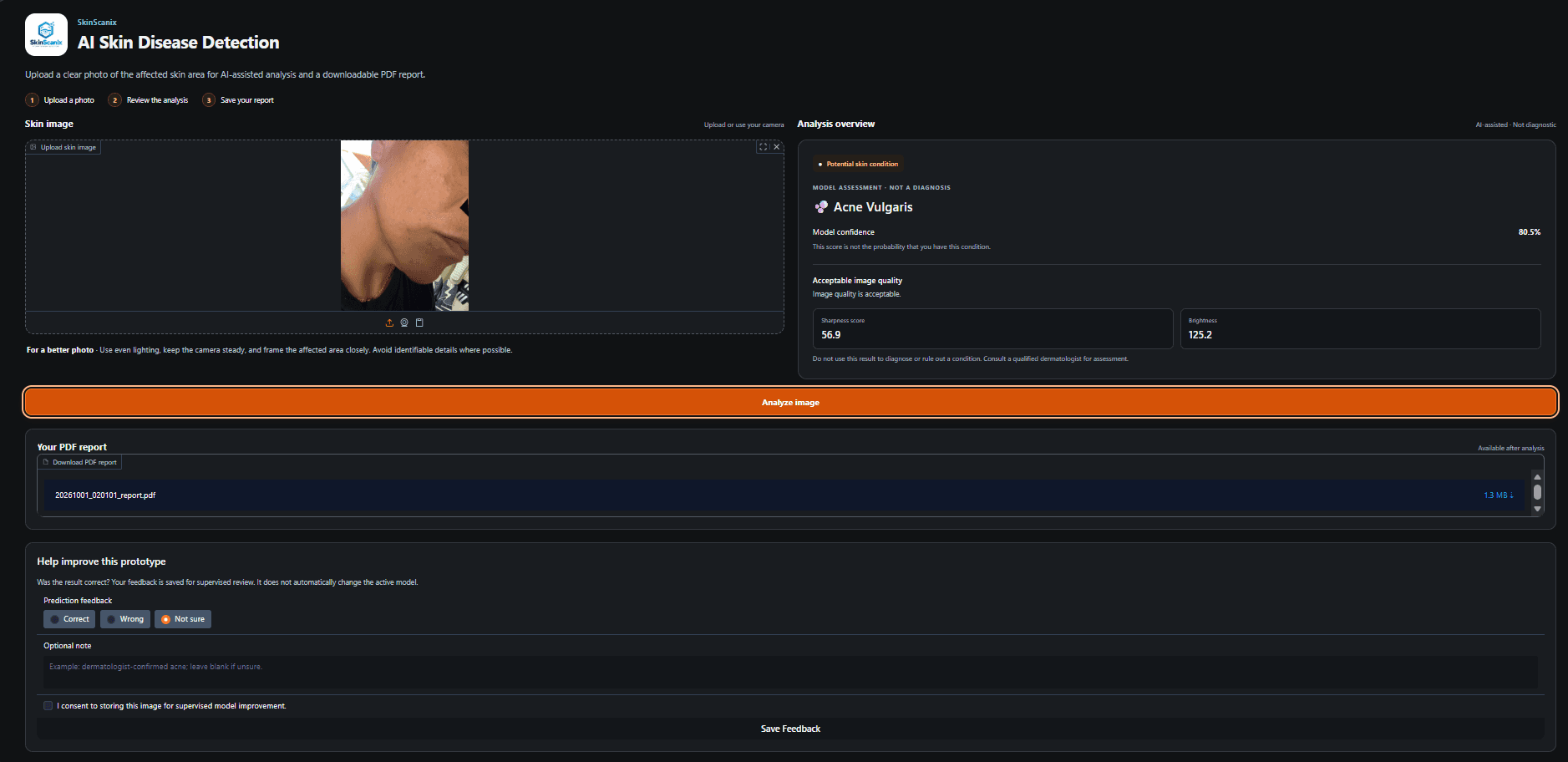
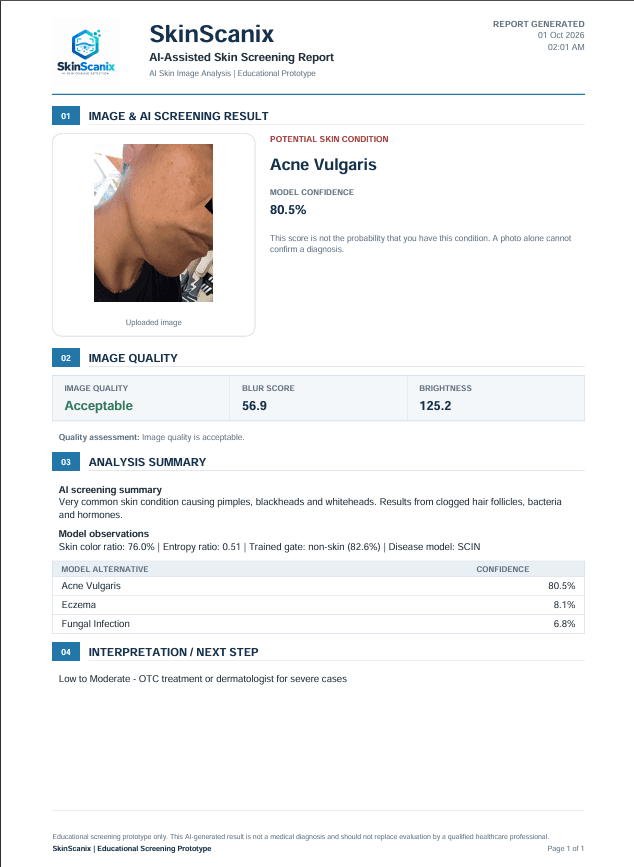
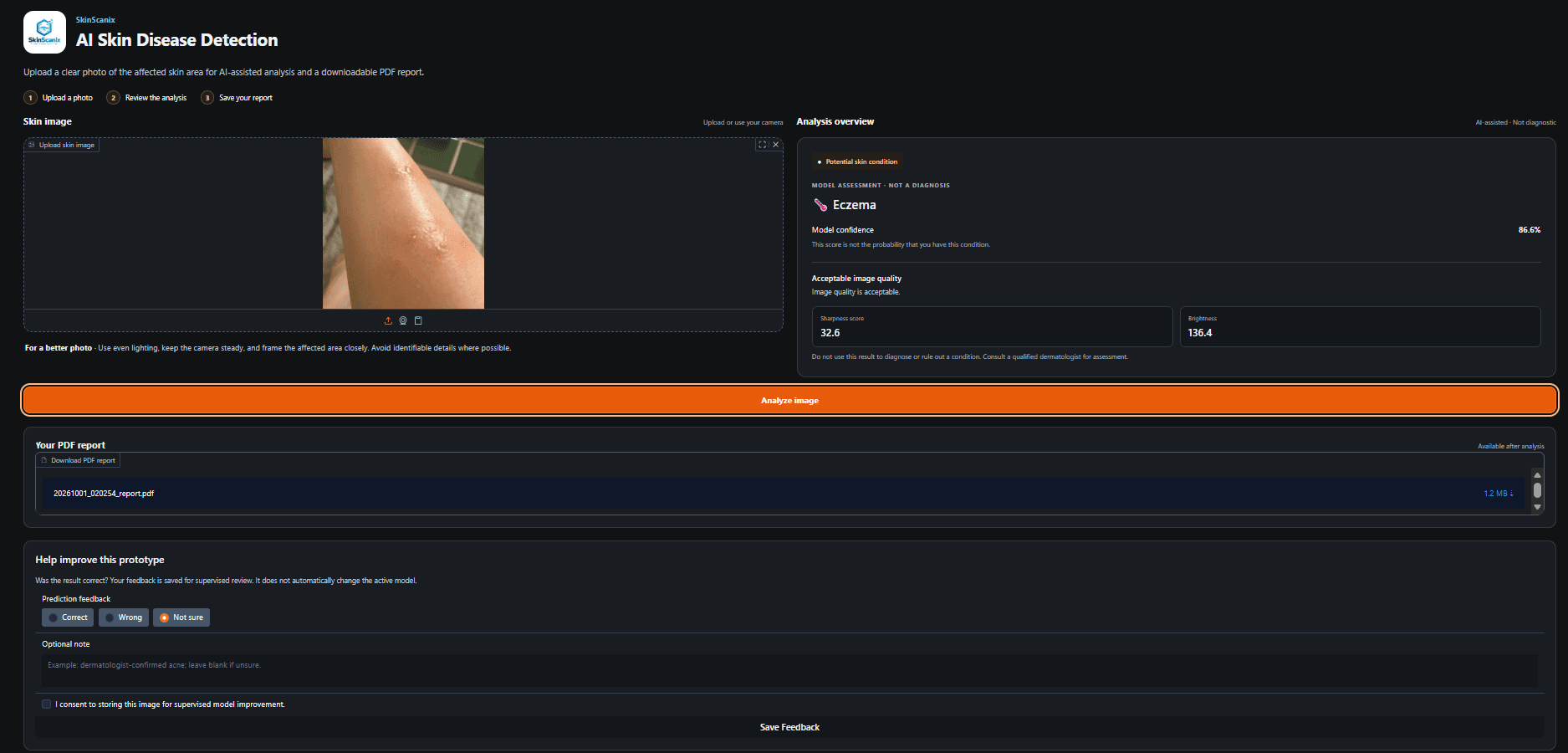
Architecture
The end-to-end flow from raw data to a shipped result.
Capture
Upload or camera image
Check
Sharpness, brightness & skin gate
Infer
TFLite image classification
Report
Result panel + PDF download